FORM PERFORMANCE CENTER
PROTOCOL · ASSESSMENT

Performance starts with clarity.

A multi-domain protocol — biomechanics, metabolics, strength, recovery, composition. Each measurement traceable to a method, each method scoped to the individual.
An athlete and performance coach reviewing assessment results on a large monitor in a human performance laboratory.
SESSION READOUT · DOMAIN 03/05● ACTIVE
VO₂ Max
58.4 ml/kg/min
▲ 3.1% over 6 mo
01 / WHAT WE MEASURE

Five domains. Each with its own instrument, its own metric, its own reason for being on the list.

01
Biomechanics
Instrument
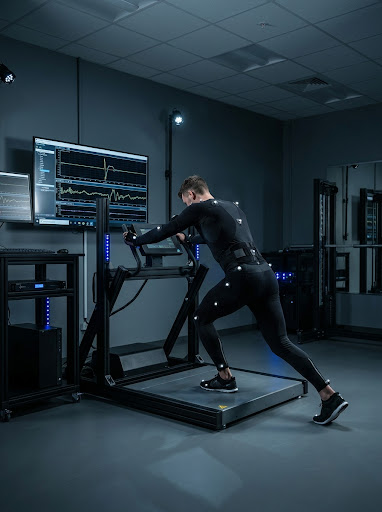
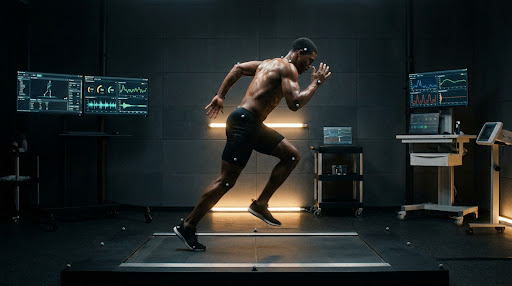
Dual force plates · 3D motion capture
Metric
Vertical impulse · ground contact symmetry
Why
How force is produced, absorbed, and transferred — under standardised loading conditions.
02
Metabolic
Instrument
Indirect calorimetry · gas exchange analyser
Metric
VO₂ max · ventilatory thresholds · substrate use
Why
The ceiling of aerobic work and the cost of operating beneath it.
03
Strength & Power
Instrument
Isometric mid-thigh pull · counter-movement jump
Metric
Peak force · rate of force development
Why
Capacity to express force quickly — the determinant beneath most performance outcomes.
04
Autonomic & Recovery
Instrument
HRV monitoring · overnight physiological tracking
Metric
RMSSD · sleep architecture · readiness index
Why
Whether the system is prepared to receive the next training load.
05
Composition
Instrument
DEXA · segmental hydration analysis
Metric
Lean mass distribution · regional fat · bone density
Why
The structural substrate every other metric is built on.
02 / DOMAIN DETAIL

A complete picture of performance — domain by domain.

01

Movement Analysis

Joint-by-joint screening, gait analysis, and biomechanical capture under load. A composite movement quality score, traceable to the segments that constrain it.

MOVEMENT COMPOSITE
92 / 100
+8 pts vs. baseline
02

Strength Profiling

Force–time curves from isometric and dynamic protocols. Asymmetry, rate of force development, and peak output — the components behind a single one-rep-max number.

PEAK FORCE
2,184 N
L/R symmetry · 0.97
03

Aerobic Capacity

Graded exercise testing with continuous gas exchange. VO₂ max, ventilatory thresholds, and metabolic efficiency mapped against heart rate and power.

VO₂ MAX
58.4 ml/kg/min
+3.1% over 6 mo
04

Recovery Readiness

Twenty-eight days of HRV, resting heart rate, and sleep continuity. Autonomic balance translated into a daily readiness score, validated against perceived effort.

HRV TREND
76 ms
Readiness · stable
05

Body Composition

DEXA-derived regional composition. Lean mass distribution, bone mineral density, and visceral adiposity — the substrate beneath every other measurement.
LEAN MASS
62.8 kg
Asymmetry · 1.2%
A coach and athlete reviewing a printed performance report inside a sports science laboratory.

Data doesn’t replace coaching. It improves it.

03 / OUTCOME

From assessment to action. Not a one-off test. A continuous operating loop.

01

Current strengths

A baseline measurement of your existing physiological and biomechanical assets.

02

Performance limitations

Identification of the specific bottlenecks hindering your output.

03

Areas for improvement

Targeted zones where marginal gains will yield maximal results.

04

Training priorities

A ranked list of movements and protocols to focus on.

05

Recovery priorities

Biological restoration strategies tailored to your metabolic load.

06

Recommended next steps

A concrete path forward within the Form ecosystem.

The Loop
01ASSESS02INTERPRET03PLAN04COACH05REASSESSOPERATING LOOPCONTINUOUS

Every assessment closes a cycle and opens the next. The reference point updates. The prescription updates with it.

04 / WHO IT’S FOR

Different starting points. The same method.

Athletes

Competition-grade performance audited against measurable peaks.

Professionals

Decision-makers operating at sustained high cognitive load.

Founders

Performance treated as competitive infrastructure, not lifestyle.

Returning from injury

Re-entry built on biomechanical baselines, not generic protocols.

Smarter approach

Training informed by evidence rather than tradition.

05 / WHAT HAPPENS NEXT

Five steps from first conversation to first review of findings.

  1. 01
    Introductory Conversation
    A short call to understand goals, current training, and prior assessments. No commitment.
    20 min · phone or video
  2. 02
    Assessment Recommendation
    We recommend the protocol scoped to your profile — and explain why each test was selected.
    Written follow-up
  3. 03
    Scheduling
    A single half-day window in the lab. Preparation guidelines sent in advance.
    By appointment
  4. 04
    Assessment Day
    Sequential domain testing with on-site interpretation. You leave with preliminary readouts.
    3–4 hours
  5. 05
    Review of Findings
    A working session to walk through the full report, the model, and the recommended path forward.
    60 min · in-person or video
06 / INTAKE

Tell us what you’re working toward.

The intake protocol scopes the assessment — primary goal, training background, the question that prompted you to explore it now. Six fields. Five minutes.

Begin Intake →

Submissions reviewed within 1–2 business days

“Performance without measurement is guesswork.”

Contact lab technicians →